Arneo
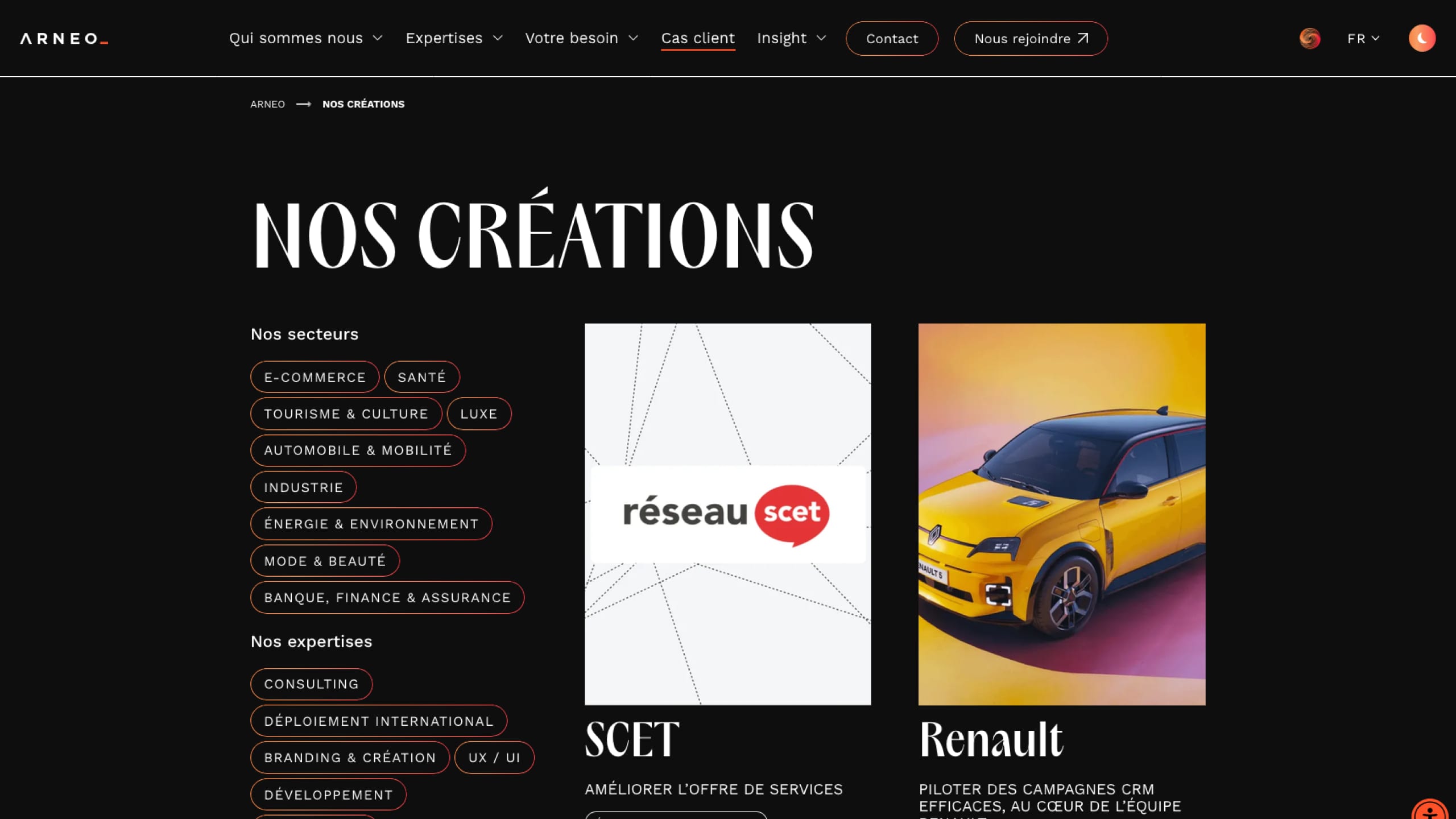
Rebuild of the Arneo agency's editorial site in Next.js (SSR) on a headless Drupal, with strong visual and performance stakes.
Context
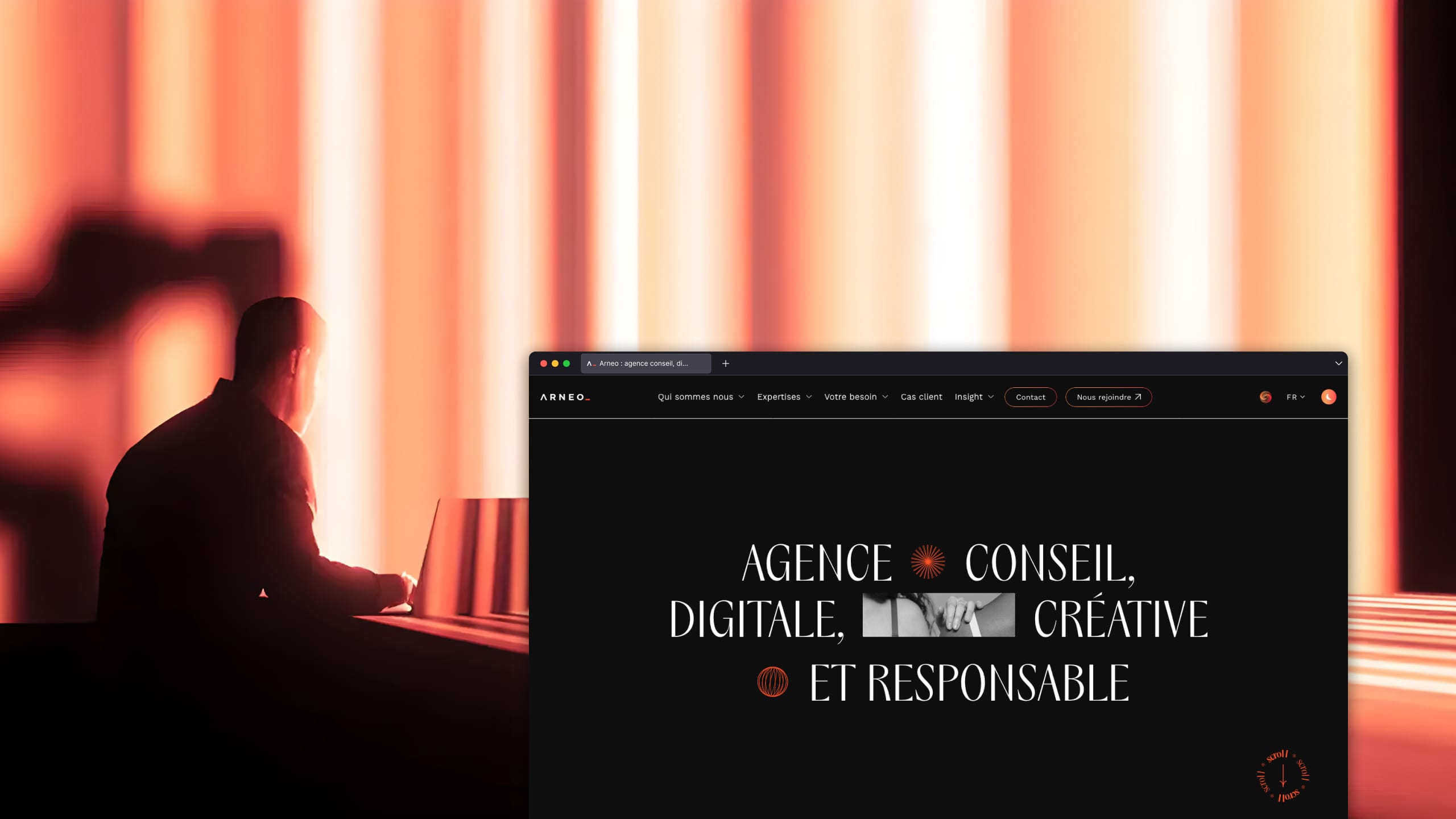
Arneo rebuilt its agency website, a rich editorial site with a strong visual identity. Three demands drove the project: bold animations, solid performance and good search ranking, all on content that changes continuously. I was front-end lead on it.
Role
I led the front-end team while developing alongside it. The site runs on a headless Drupal, whose API the Next.js front end consumes. My work centered on the front-end architecture, around two priorities: performance and the freedom left to content editors.
Delivery
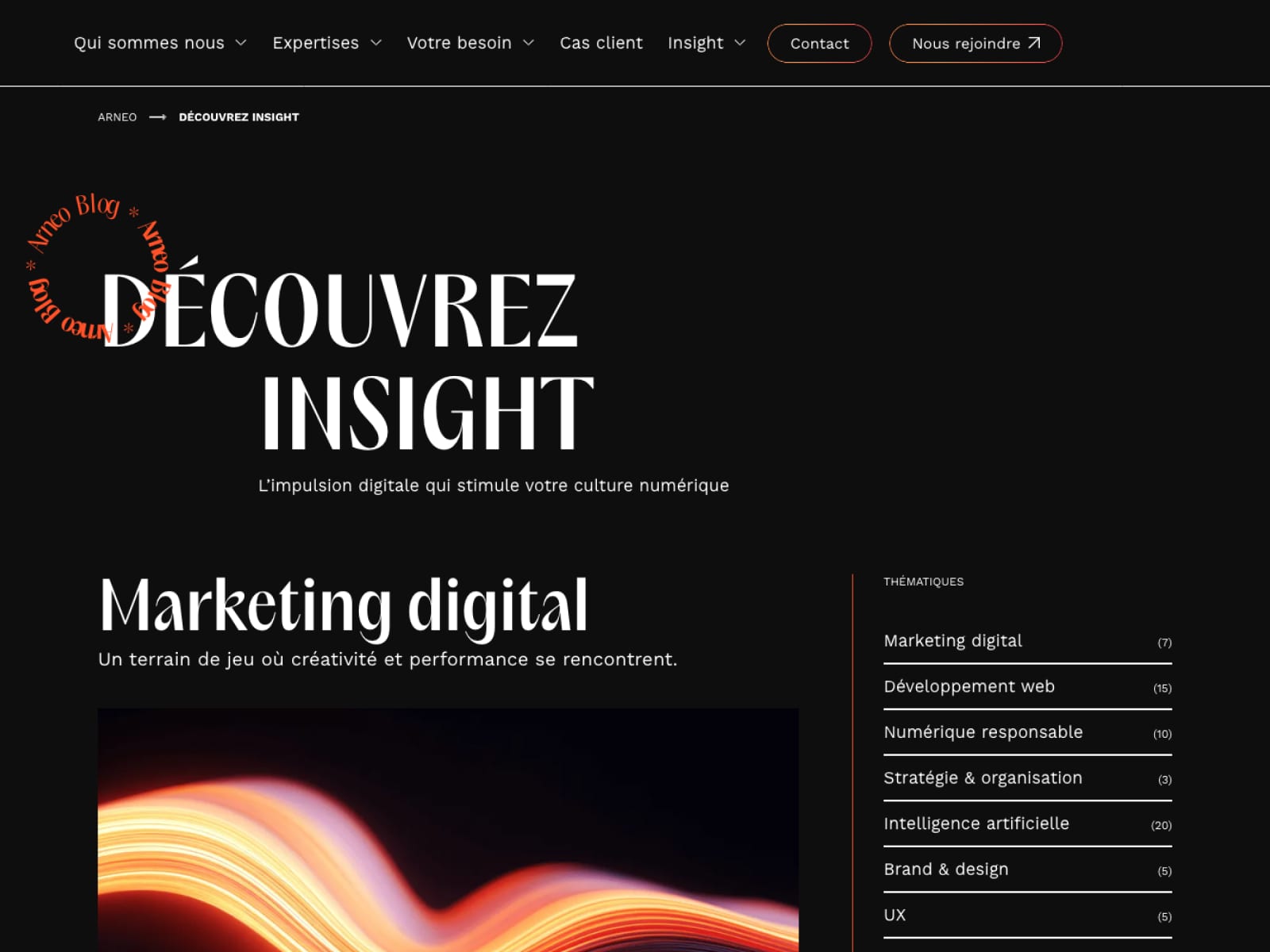
The front end is Next.js, server-rendered. On an editorial site whose content changes constantly, SSG was out: the render has to reflect the latest version on every visit, without giving up any speed or search ranking. Each page is built from blocks defined in Drupal, which a single component, the BlockManager, renders in the chosen order. Content editors compose their pages freely, with no limit on blocks and without touching the code.
Performance rests on a multi-level cache, from the front end with Next.js to the back end with Drupal. I built the entire front-end cache with Next.js; then, to invalidate a specific piece of content, I created an API reserved for the back end, letting it trigger that invalidation as soon as content is edited. Data shows almost instantly, without ever serving a stale version. That was the stake: on a site this loaded, with its visual layer and its third-party libraries, performance collapses without the cache.
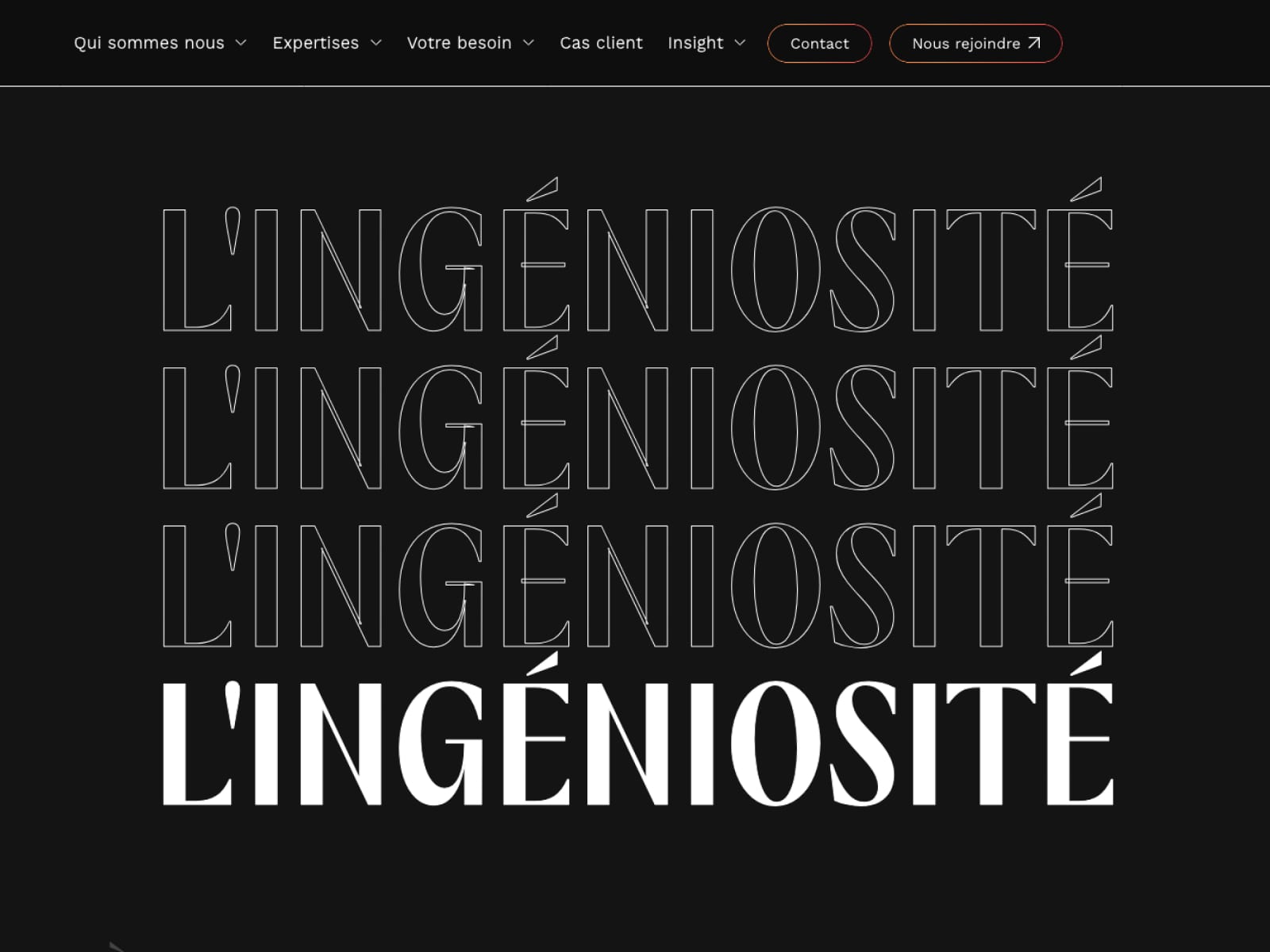
The experience comes through in a committed art direction and in the animations, present across much of the site. Movements triggered on scroll, refined micro-interactions, with plenty of elements appearing on hover, down to animated SVGs. They give the site its rhythm, without ever overdoing it. Images load lazily, a placeholder giving way to the real visual once it is ready. CSS was favored over JavaScript wherever possible, to keep pages light and preserve real smoothness in the browser.
Results
The site has been live since mid-2025. The bet was to hold high performance despite a heavy visual load and many third-party libraries: Lighthouse measures, on desktop, 97 in performance, 96 in accessibility, 92 in best practices and 92 in SEO. The cache keeps them at that level despite everything the page carries.